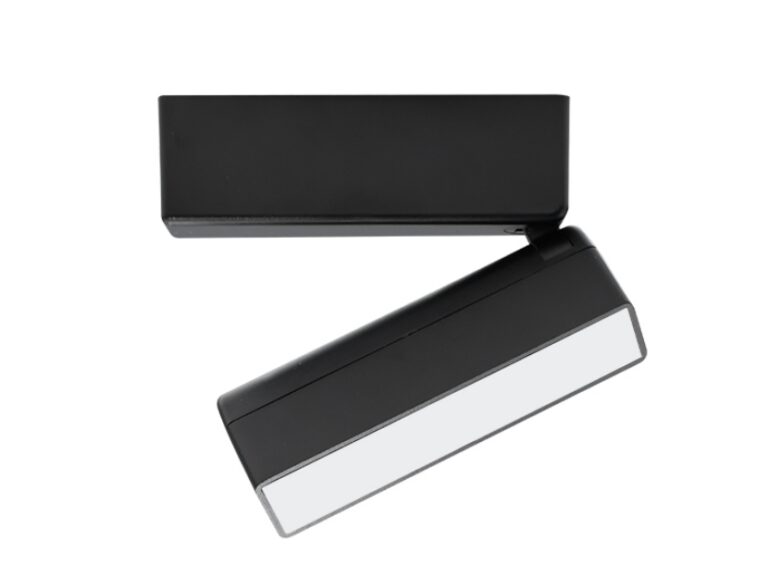
Plan the working position
A folding body looks different when aimed than when closed against the rail. Put its intended orientation into the elevation so the ceiling composition reflects actual use. Show the hinge side and the target surface, then draw the module in its working position beneath the rail. Otherwise a neat closed-body image can conceal the depth and visible face of the installed fitting. YZ-M26-6ZS and 12ZS are grille choices, while 5ZF and 10ZF identify flood bodies; a foldable form does not make their lighting effects identical. Ask for the adjustment information belonging to the selected designation and check whether the required target can be reached from the proposed rail position. Keep adjacent modules out of the body movement path. An aiming decision made during drawing review is easier to preserve than a rail installed with too little clearance for its intended folded position.
Choose the optical job
Grille and flood faces distribute light differently. Describe whether the task needs a defined accent or broader fill before deciding which folding body suits it. A picture above a sideboard may need light directed toward its vertical face, while nearby circulation can benefit from a more general contribution. Mark those two jobs separately instead of ordering the same folding unit for both because the bodies look related. Compare the optical information for YZ-M26-6ZS or 12ZS against the selected YZ-M26-5ZF or 10ZF flood, using the actual mounting geometry. The hinge changes the direction of the luminaire; it does not erase the difference between its optical faces. Review how the tilted body appears from the room entrance, particularly where the brighter face points across a walkway. Keep the target description next to the model in the order so an optical substitution cannot pass as a simple housing change.
Compare standard and die-cast forms
Similar family descriptions do not replace a variant-specific technical sheet. Include the full designation and body description in the sample or quotation request. The die-cast group carries the 6ZS1, 12ZS1, 5ZF1 and 10ZF1 suffixes, which must remain distinct from the standard 6ZS, 12ZS, 5ZF and 10ZF forms. Ask for the dimensioned body outline and adjustment details for each proposed alternative before comparing their installed appearance. A change in housing can affect the visible edge, hinge relationship and available clearance even when the intended lighting job remains unchanged. List standard and die-cast proposals in separate columns with their own descriptions rather than placing them beneath a single generic folding-light line. Assess finish beside the neighboring rail at a shallow viewing angle. That view makes a difference in body shape easier to notice than a face-on product photograph does.
Review the projection
Folding a module changes the space it occupies below the rail. Check its relationship with doors, tall storage and sightlines through the room. A cabinet door may clear a closed body but meet a tilted grille during ordinary use, so draw the cabinet's opening path as well as its fixed outline. The required clearance should come from the selected fitting's drawing and intended adjustment position rather than an assumed universal hinge angle. Include both the standard YZ-M26-ZS or ZF choice and any proposed die-cast alternative in that check. Where the rail runs close to a soffit edge, confirm that the body can be reached and moved without scraping the finish. Keep a physical sample available when the overlap is difficult to explain on paper. A folding luminaire should retain its useful movement after the surrounding joinery and ceiling details have been completed.
Keep reflections under review
An angled luminous face can appear in glass, polished counters or framed art. Consider both the target and the viewer when refining its position. Tilt a sample toward the intended object, then inspect the reflection from the usual approach direction; a successful patch of light can coexist with an uncomfortable reflected source. Grille and flood variants should be assessed separately because the appearance of their faces differs when seen in a mirror or glazed picture. For a YZ-M26-5ZF or 10ZF, the broad luminous area deserves attention near reflective furnishings. A ZS grille may produce a different visible pattern even when aimed from the same rail point. Move the rail position in the drawing if a small change avoids the reflection without losing the target. Record the accepted orientation with the model description so the installer has more guidance than a fitting symbol and an arrow.
Allow access for adjustment
A fitting chosen for directional flexibility should remain practical to reach. Discuss the intended maintenance method with the project team before fixing the final track height. A folding body above a fixed island or deep display cabinet can be harder to adjust than one above an open floor, even when both sit on the same ceiling line. Mark the clear standing area and the approach needed for suitable access equipment. Ask the installer to explain how the selected M26 body will be adjusted and removed under the supplied instructions, with electrical work handled by a qualified contractor. Leave enough space to grasp the body without pressing against the grille or flood face. Do not let a suspended decorative element block that approach later. Keep adjustment locations in the handover drawing, especially where the original design expects the folded modules to follow changing displays or furniture positions.
Request the precise fitting schedule
Pair each folding body with its actual specification sheet and intended location. Confirm the orderable variant and its power rating during the quotation discussion. The product names here distinguish grille, flood and die-cast forms, so an order that says only M26 folding lamp leaves several decisions unresolved. Use the full YZ-M26-6ZS, 12ZS, 5ZF or 10ZF designation, retaining the final 1 where a die-cast form is selected. Add the desired light appearance and the target that requires adjustment. Include these luminaires in the complete 48V load schedule together with fixed modules and decorative heads. When a substitute is proposed, compare its body projection and optical information as well as its rating. An installer should be able to connect each delivered box to a marked ceiling position without guessing whether a flood face or a grille face was intended there.
Bring the selection into the room: M26 Folding Grille and Flood Lights
Prepare the folding-light selection with the bodies drawn open toward their targets. Name grille or flood, standard or die-cast, and preserve the complete YZ-M26 suffix on every schedule line. Add cabinet-door clearances, reflection views and a practical adjustment route to the drawing. A representative sample can then answer the real purchasing question: whether the selected folding body delivers the intended light while remaining visually comfortable and usable beneath the finished ceiling.