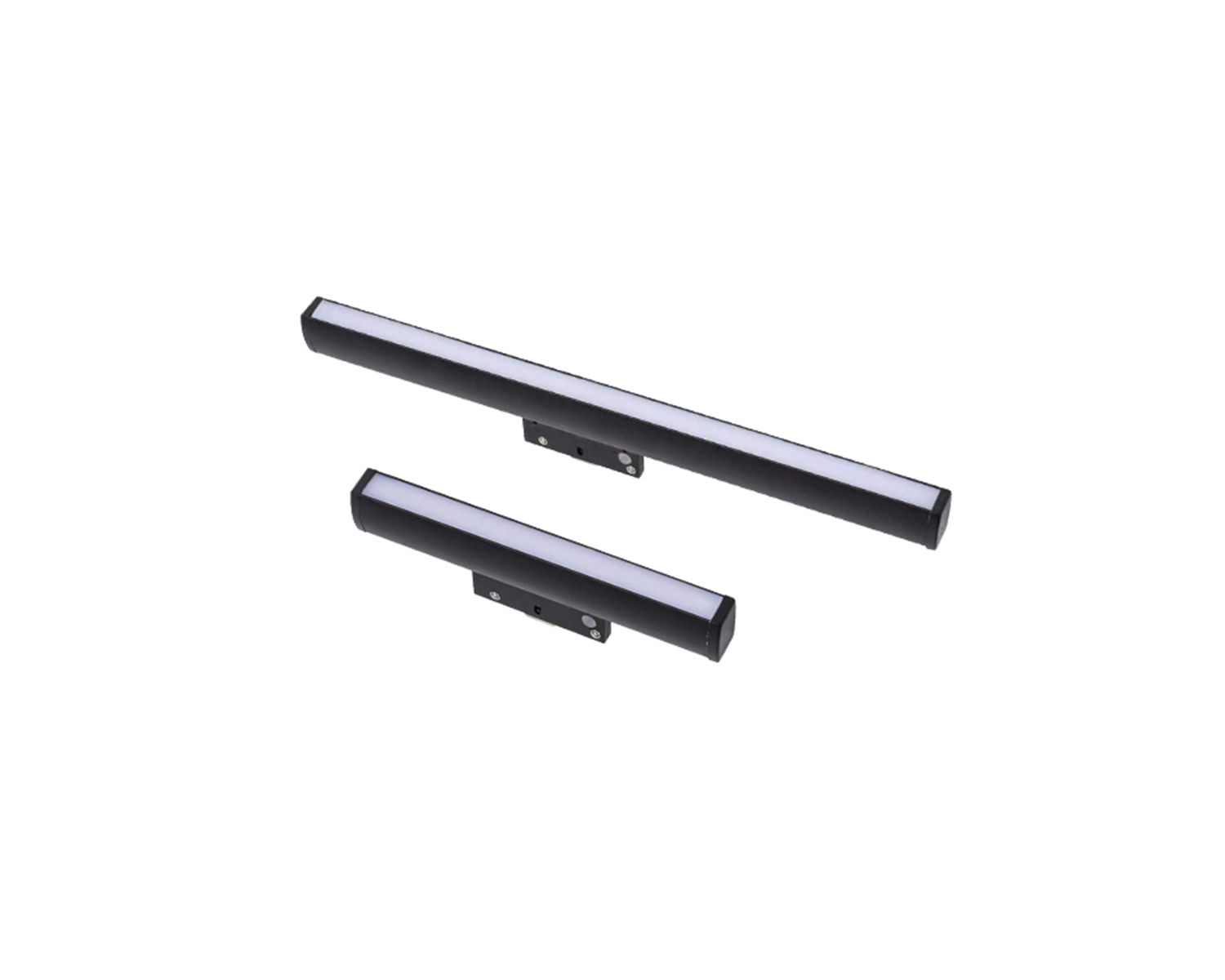
Choose the luminous rhythm
A short flood and a long flood occupy the rail differently. Decide whether the ceiling needs separate islands of light or a more continuous visual line before selecting body lengths. Draw the luminous faces at their actual scale, including the dark gaps between them and the positions of rail connectors. An elevation can reveal a ragged sequence that an evenly spaced set of ceiling symbols conceals. The YZ-M26-5F, 10F, 10F1, 20F and 30F family includes different body choices, so obtain their dimensioned drawings before arranging a row. The two 10W options deserve particular attention because their equal power does not imply an equal footprint. Where a flood row ends near a doorway, establish a deliberate endpoint instead of letting the last available module determine the composition. Leave access to the rail's connection points visible in the final layout.
Review the background surfaces
Broad light interacts with walls, ceiling finishes and furniture. Include those surfaces in the design conversation so the flood is assessed as part of the room. The listed 150° beam makes nearby pale finishes important to the perceived result, but the beam label does not predict the brightness of every wall or worktop. A dark timber wall and a pale painted wall will contribute differently to the room even when the same fitting is used. Show the rail's distance from vertical surfaces and identify deep shelves or tall cabinets that can interrupt the spread. Review the YZ-M26 flood sample beside the actual paint and furniture finishes wherever possible. Look for an uncomfortable bright patch near the rail as well as useful illumination farther away. A broad optic should earn its place through the light it contributes to occupied areas, not merely through its visible luminous length.
Distinguish the similar power options
The 10F and 10F1 descriptions refer to different body lengths despite sharing a power rating. Include the intended body with the model name when requesting a quotation. A purchaser replacing one with the other on the strength of the 10W entry could change the spacing of the whole luminous row. Put YZ-M26-10F and YZ-M26-10F1 on separate schedule lines, each with its own quantity, drawing and location references. Ask the supplier to identify the body dimensions on the proposal, then compare those outlines against the rail arrangement. Keep any adjacent grille or spotlight positions in view during that check, because a longer flood face may consume space reserved for a different lighting task. When comparing prices, preserve the exact variant rather than accepting a generic description such as linear flood 10W. Equal electrical demand does not make the two visible installations identical.
Control the visual brightness
A wide luminous face may be visible from seating or adjacent rooms. Consider those sightlines while locating the rail and selecting the balance of flood and accent modules. Stand at the entrance and sit at the planned sofa position during a sample review; the same 150° fitting can look discreet from one point and conspicuous from another. A polished dining table may also reflect the face when the direct view seems acceptable. Mark those reflection paths on a room section before moving the flood simply to make its ceiling spacing more symmetrical. Choosing a lower listed power within this family changes the lighting schedule, but it does not remove the need to examine location and view. Ask for the relevant optical information and evaluate the actual body proposed. Keep accent heads directed toward their own targets so a comfort adjustment to the flood layer does not erase the room's focal points.
Avoid filling rail by default
Empty stretches can be useful in a composition. Place the flood modules where they serve the lighting task and leave the remaining track available for future adjustments. A rail passing over a passage and then a sitting area does not need the same luminous density along both parts. On the drawing, identify which gaps are intentional and which positions remain undecided; otherwise procurement may fill every gap with another fitting. Use the actual lengths of the selected YZ-M26-5F, 10F, 10F1, 20F or 30F bodies to check that the dark intervals survive the order. Keep the power schedule based on installed modules rather than the maximum number that could fit. If future additions are being considered, discuss their electrical implications separately with the designer. An unoccupied rail section offers layout flexibility only when later fittings and supply arrangements are chosen within the same compatible system.
Coordinate supply selection
List the actual flood modules alongside the other luminaires in the system. Give the electrical designer the complete schedule for the proposed power arrangement. The family is listed for 48V and carries 5, 10, 10, 20 and 30W entries in the model sequence; preserve the distinction between the two 10W bodies when adding the load. Include decorative fittings and directional heads that share the installation instead of calculating only the flood row. Draw where power enters the rail and where the supply can be reached, particularly if the broad luminous line is intended to run close to a finished wall. Ask the designer to review the complete arrangement against the selected component documentation. Rail length alone cannot establish the connected lighting demand. Keep the approved supply description with the flood schedule so a later increase in luminous coverage triggers an electrical review rather than an unnoticed purchasing change.
Test the broad-light effect
Request the relevant technical sheet and discuss a representative sample against the room finishes. Evaluate useful reflected light as well as the appearance of the luminaire itself. Place the sample at the proposed ceiling level rather than holding it close to a paint swatch, because distance and angle influence how much of the broad distribution reaches the wall. Include a dark object or furnishing in the trial to avoid judging the whole room from a highly reflective surface. For the YZ-M26 flood family, record which of the 5F, 10F, 10F1, 20F or 30F bodies was assessed and whether its 150° distribution produced the intended background effect. Photograph the sample arrangement with its physical location noted, while judging comfort by eye. Camera exposure can make two visibly different room conditions appear similarly bright, so retain written observations about reflections, shadows and sightlines.
Bring the selection into the room: M26 Linear Flood Lights
Send a flood layout that shows luminous body lengths rather than a row of identical symbols. Distinguish YZ-M26-10F from 10F1, retain the selected 48V module ratings, and identify the walls or circulation areas that need broad illumination. Include seating views and reflective finishes in the sample brief. Those details let the flood selection be reviewed for its contribution to the room and its visible rhythm along the rail at the same time.